

- This event has passed.
Science in the Field: Students and CNR Researchers Together
April 28 All day
Rome, Italy
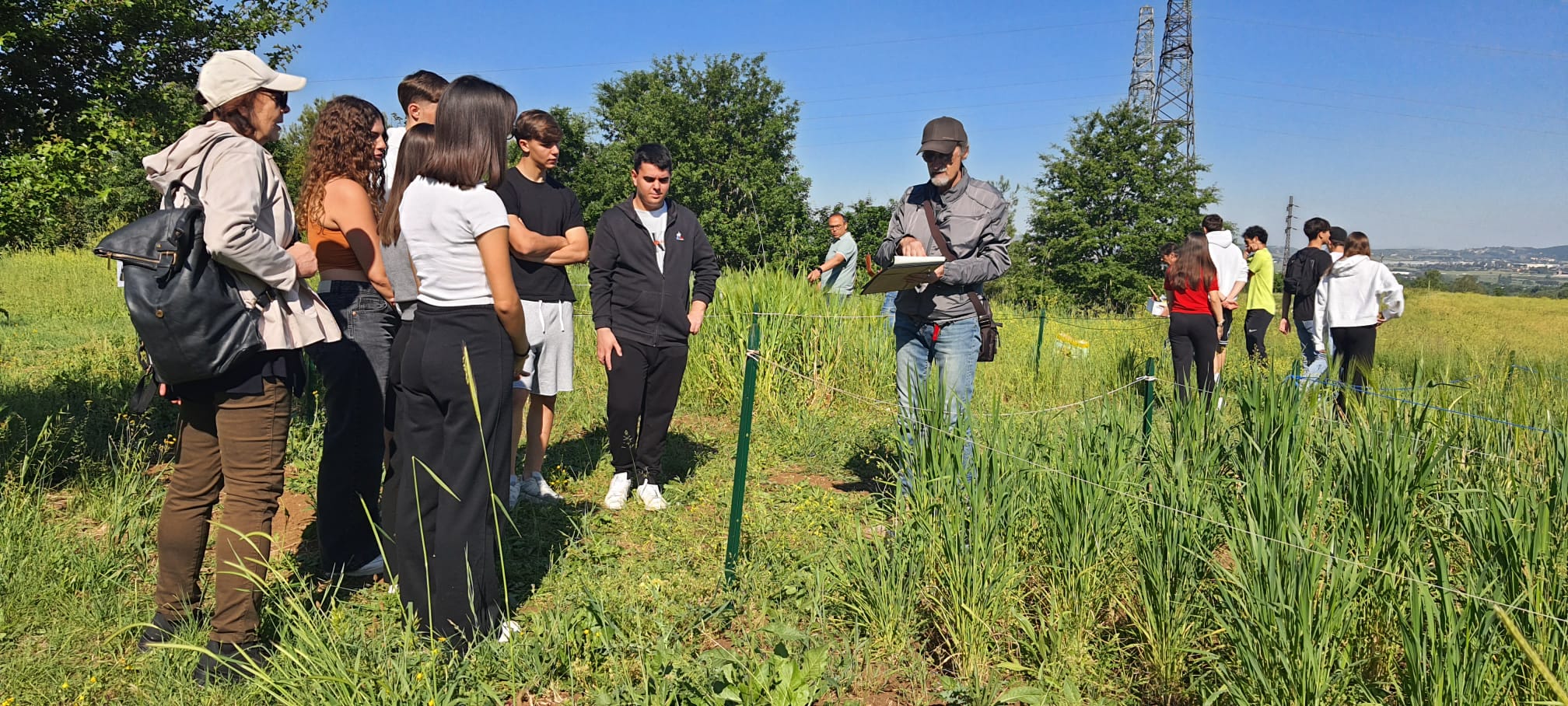
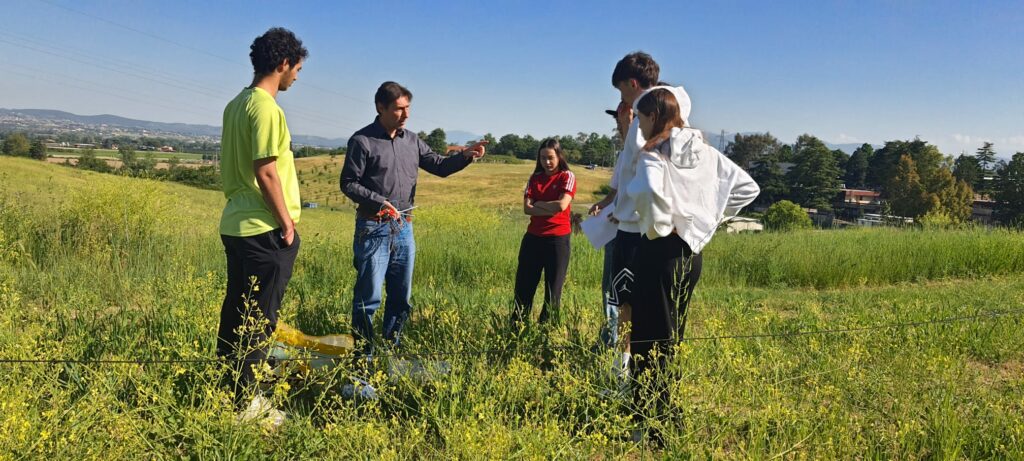
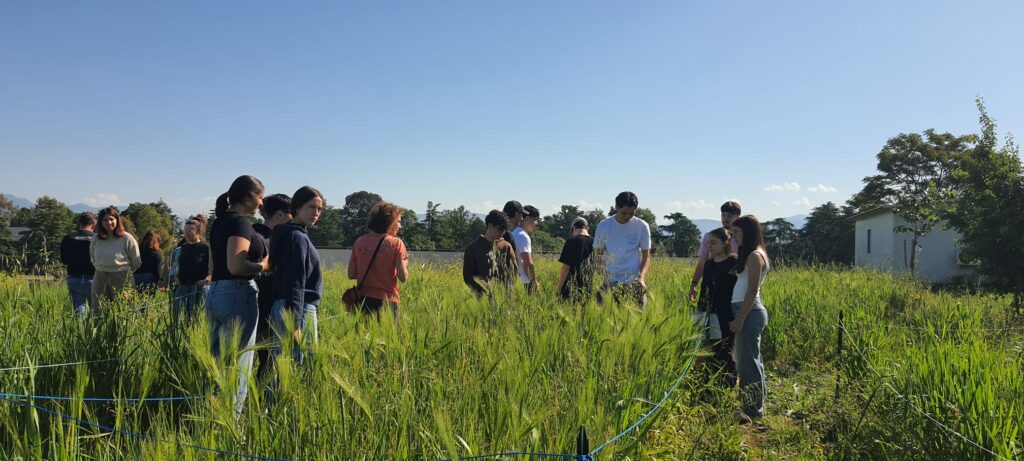
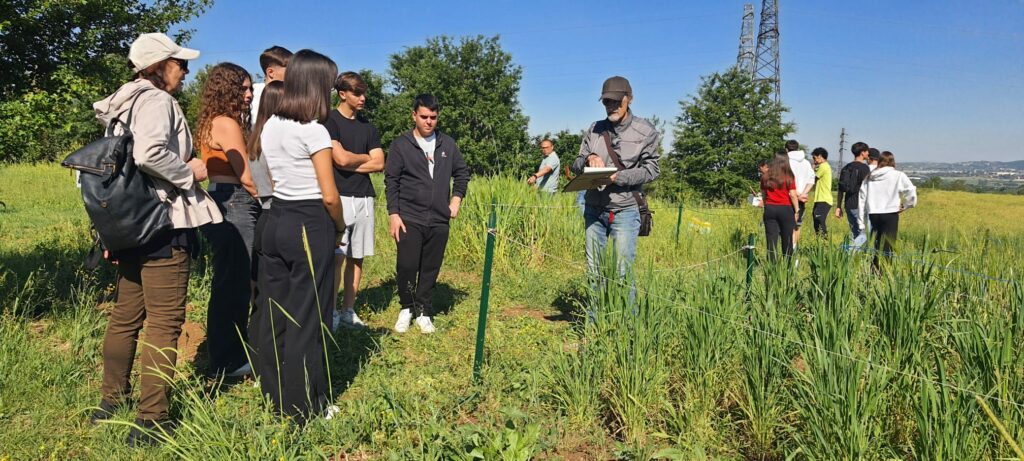
On April 28, 2026, the Research Area of the National Research Council (CNR) in Montelibretti (Rome) was transformed into an open-air laboratory. Students from a Roman high school took part in a “hands-on” scientific outreach day, actively collaborating with CNR researchers.
An Experimental Agricultural Lab
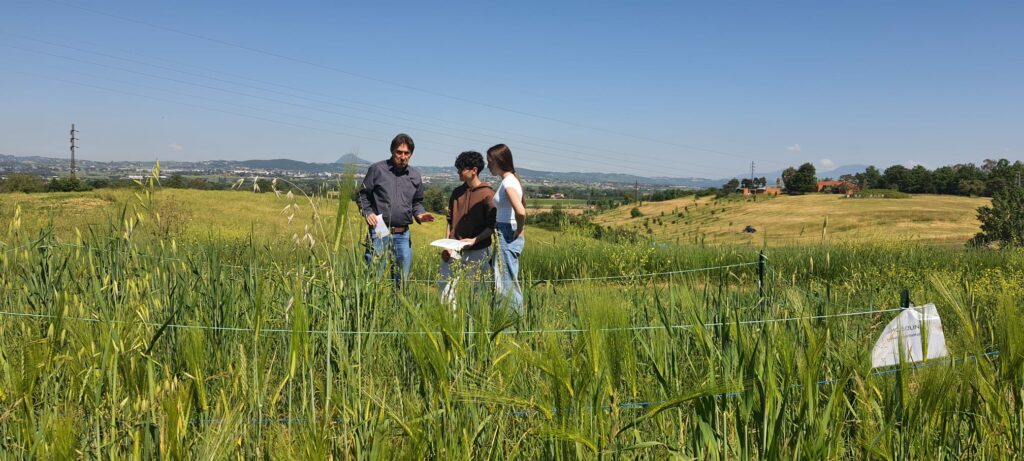
The activities have been focused on an experimental field divided into two distinct plots, designed to analyze the impact of agronomic practices on ancient and traditional cereal crops: emmer (farro), barley, and solina wheat.
- Plot A: Fertilized.
- Plot B: Unfertilized (control plot).
This setup allowed the students to directly observe how soil nutrition influences plant growth and physiology.
Research Activities
The meeting was characterized by a multidisciplinary, workshop-based approach, focusing on several aspects described by the CNR researchers: in particular two topics have been analyzed by the researchers from the Institute for Biological Systems (CNR-ISB):
1. Soil Conductivity Analysis (Soil Sensing)
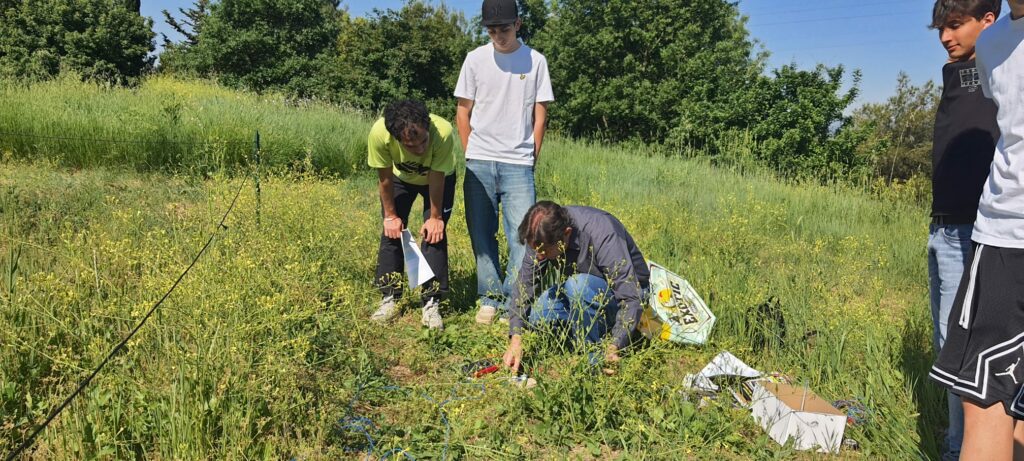
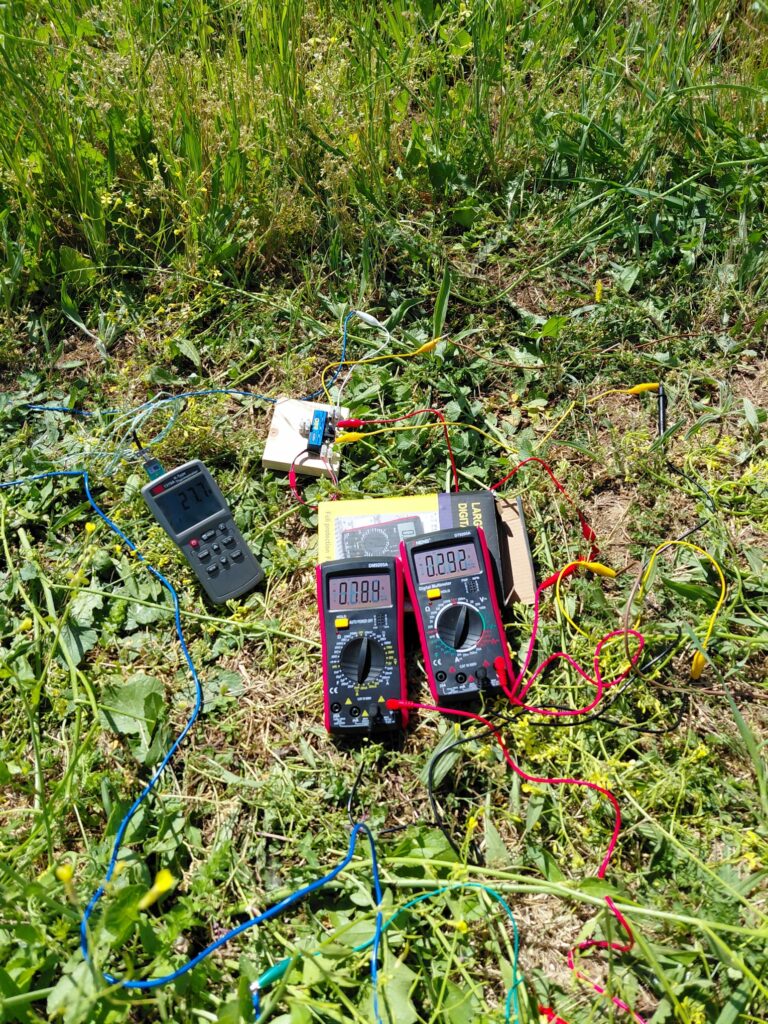
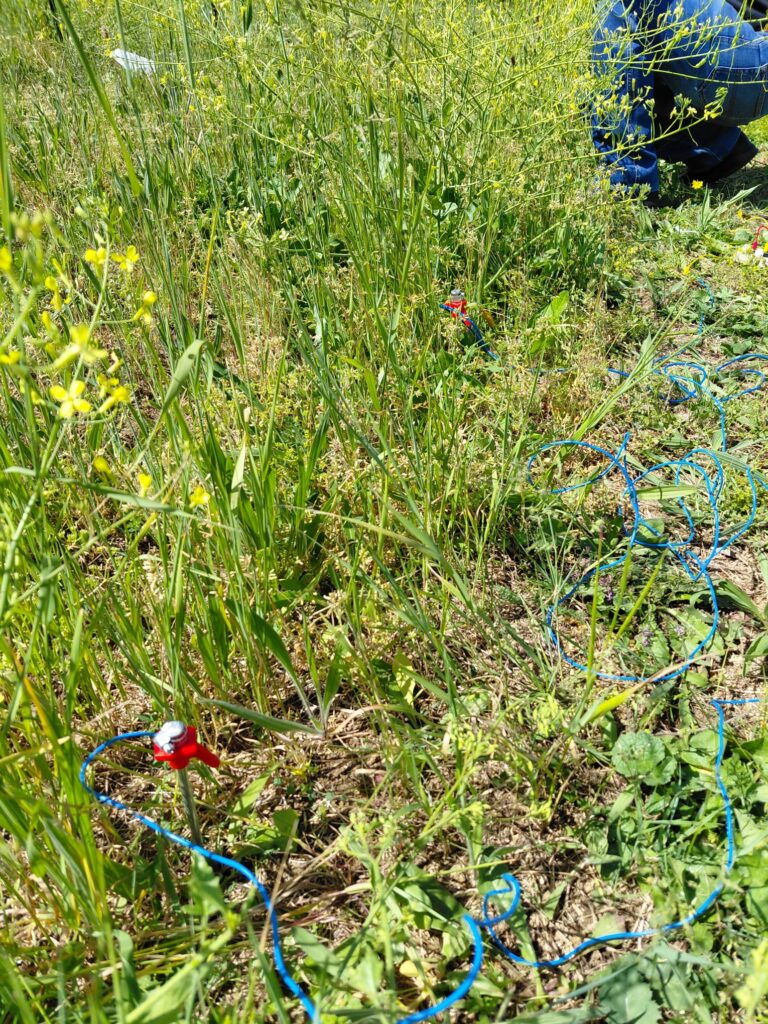
Under the guidance of Valerio Muzzini (CNR-ISB), soil resistivity measurements were carried out by students using the four-wire technique with a modified linear array characterized by a 1:2:1 spacing ratio. A DC voltage was applied to the two outer electrodes using a polarity reversal technique to compensate for stray currents and parasitic galvanic potentials. This measurement is essential for understanding the soil’s ability to retain nutrients and water.
2. Bioacoustics: The Sounds of Plants
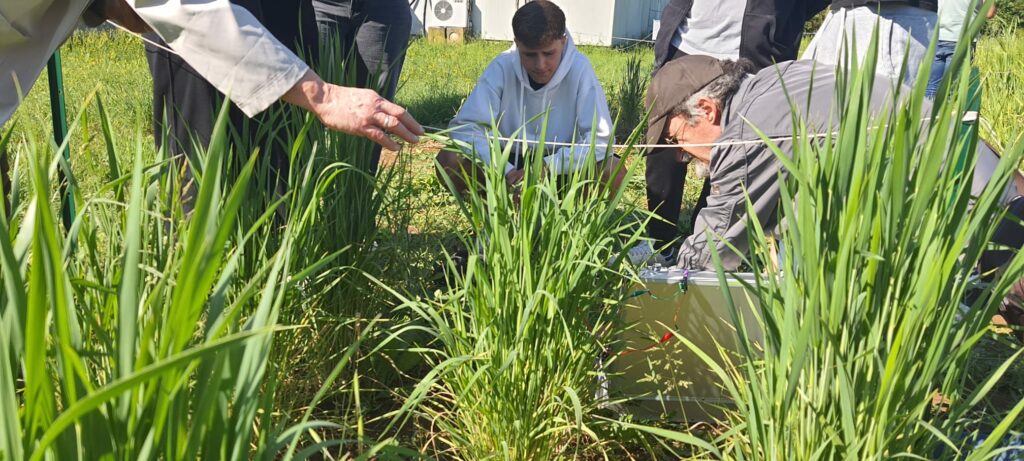
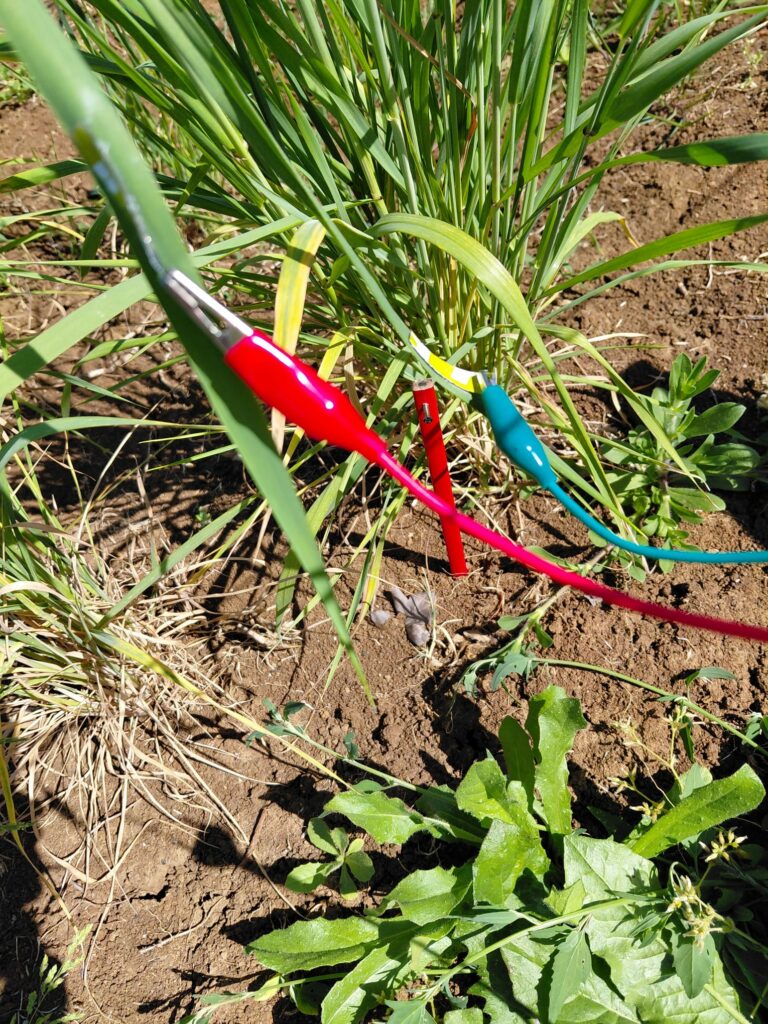
Carmelo Cannarella (CNR-ISB) engaged the class in detecting audio signals and “sounds” generated through the plants. Using precision electrodes placed both on the leaves and in the soil, students listened to and visualized variations in bio-electrical signals. This activity made it possible to investigate how plants react to different cultivation conditions (nutrient stress vs. abundance), revealing an invisible but detectable “language.”
Conclusions and Educational Impact
The experience allowed students to step out of the classroom and immerse themselves in the experimental scientific method, addressing fundamental themes at the heart of the SPIN-FERT project research. It was not merely an observation exercise, but a genuine data collection session that highlighted:
- The importance of soil analysis for sustainable agriculture.
- The physiological complexity of ancient cereals like solina wheat.
- The use of innovative technologies (electrodes and sensors) to monitor ecosystem health.
The day concluded with a debate on the role of public research in ensuring food security and protecting biodiversity, leaving the students with the realization that science is a living process made of questions, measurements, and continuous discovery.
 Created by ASN