Aptamer-based QCM-D platform for monitoring biofertilizers in soil
Authors: Francesco Lunardelli, Andrea Manfredini, Loredana Canfora, Mariacristina Gagliardi, Matteo Agostini, Domenica Convertino, Stefano Mocali, Eligio Malusa, Marco Cecchini
Microchemical Journal, Volume 219, December 2025, 116112
https://doi.org/10.1016/j.microc.2025.116112
Abstract
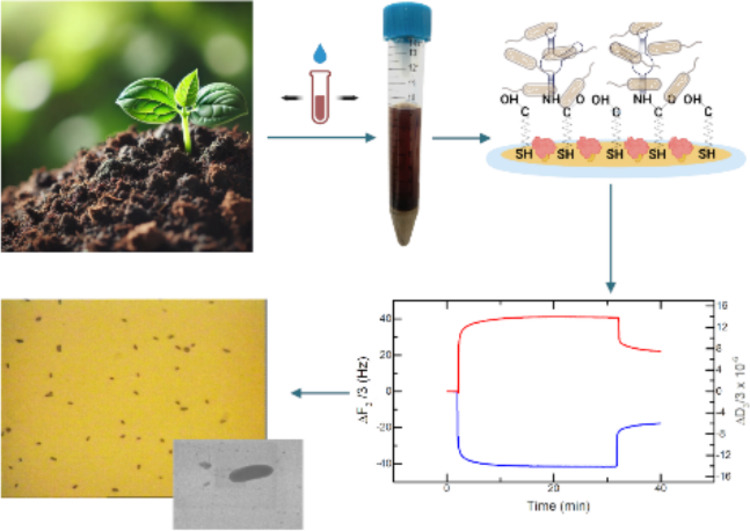
The increasing use of bioinoculants to enhance soil quality and crop productivity requires efficient sensor platforms for fast monitoring. EU and national registration demand analytical methods to evaluate environmental fate and long-term effectiveness.
Graphical abstract
This study presents a novel QCM-D aptasensor for detecting Bacillus subtilis in soil, utilising ssDNA aptamers for high specificity and sensitivity. Tested on Polish and German soils, the sensor maintained robust performance despite complex matrices, achieving a detection limit between 105 and 106 CFU/ml. The platform’s adaptability makes it promising for real-time biofertilizer monitoring and agricultural applications.
OPEN ACCESS GOVERMENT
BIOSTIMULANTS FOR SUSTAINABLE AGRICULTURE: CHALLENGES, VALIDATION NEEDS AND PERSPECTIVES FOR FIELD APPLICATION
Authors: Maria Grazia Tommasini, Sara Turci (RiNOVA, IT), Océane Edely,
Charlotte Berthelot (CTIFL, FR), Jadwiga Treder (Instytut Ogrodnictwa-PIB, PL), Eligio Malusà (INHORT, IT)
Open Access Government, Issue 51 – July 2026, p. 430 – 431
A group of experienced experts discusses biostimulants in sustainable agriculture, addressing the challenges in terms of policies fostering their adoption, validation requirements, and perspectives for field application.
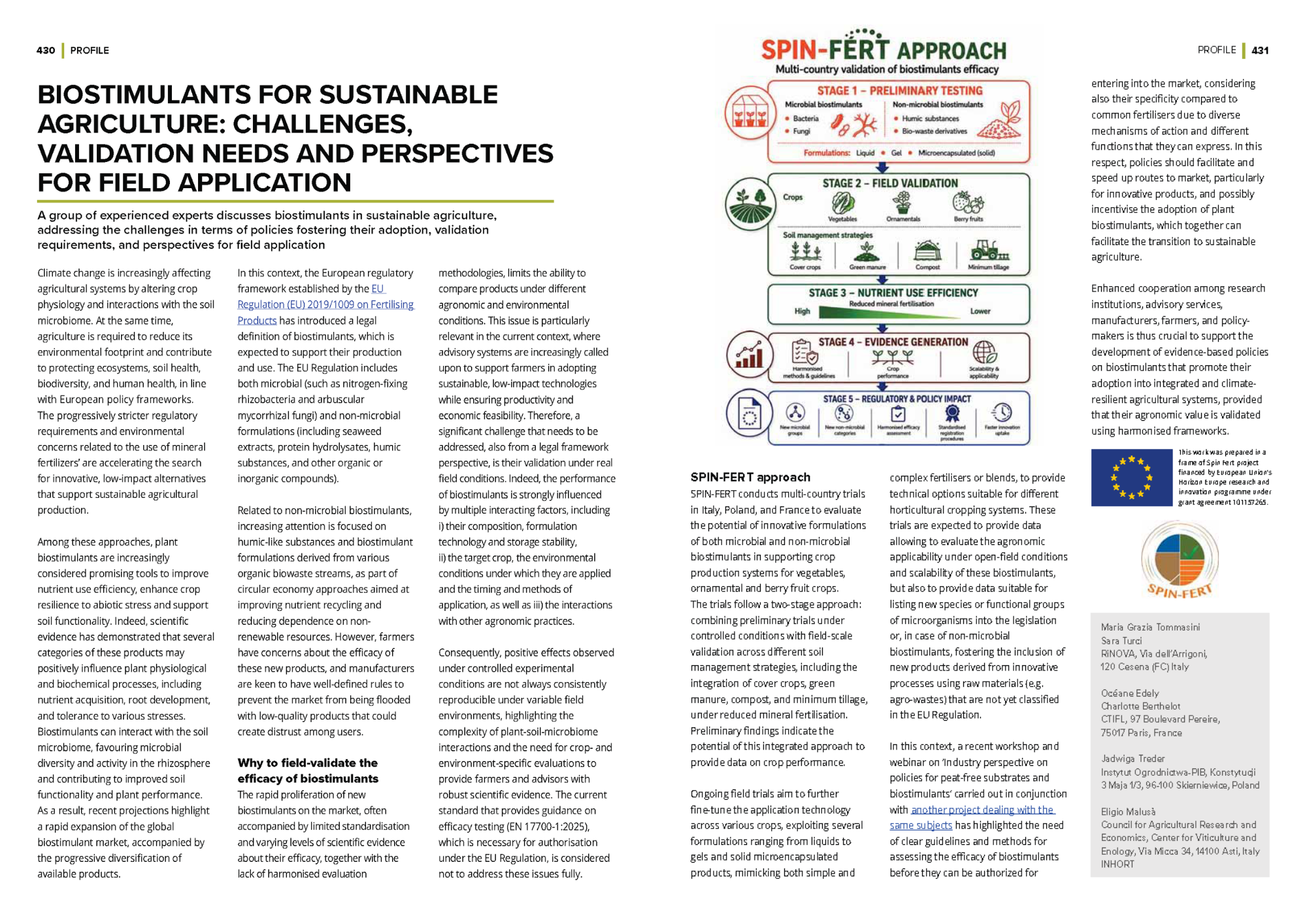
Climate change and stricter regulations on mineral fertilisers are driving demand for plant biostimulants, yet the EU Regulation (EU) 2019/1009 and related standards like EN 17700-1:2025 still fall short of providing harmonised, field-validated evidence of efficacy across diverse crops and environmental conditions. The SPIN-FERT project addresses this gap through multi-country trials in Italy, Poland, and France, testing microbial and non-microbial biostimulant formulations across vegetables, ornamentals, and berry fruits under varied soil management strategies, with the aim of generating harmonised evidence to support faster, more sustainable market uptake and regulatory adoption.
ENCAPSULATION TECHNOLOGIES AS KEY
ENABLERS OF CLIMATE-RESILIENT AGRICULTURE
Authors: Bartosz Tylkowski, Magdalena Olkiewicz, Josep M. Montornes (EURECAT, ES) ; Louisa Robinson-Boyer Xiangming Xu (NIAB, UK); Magdalena Jopek, Krzysztof Ambroziak (INTERMAG, PL); Svitlana Filonenko Nataliia Doskaliuk (HUMIFY, DE), Eligio Malusa, (CREA, IT)
Open Access Government – April 2026 edition, p. 422-423
This article explores how encapsulation technologies can promote more resilient agricultural practices in the face of climate challenges.
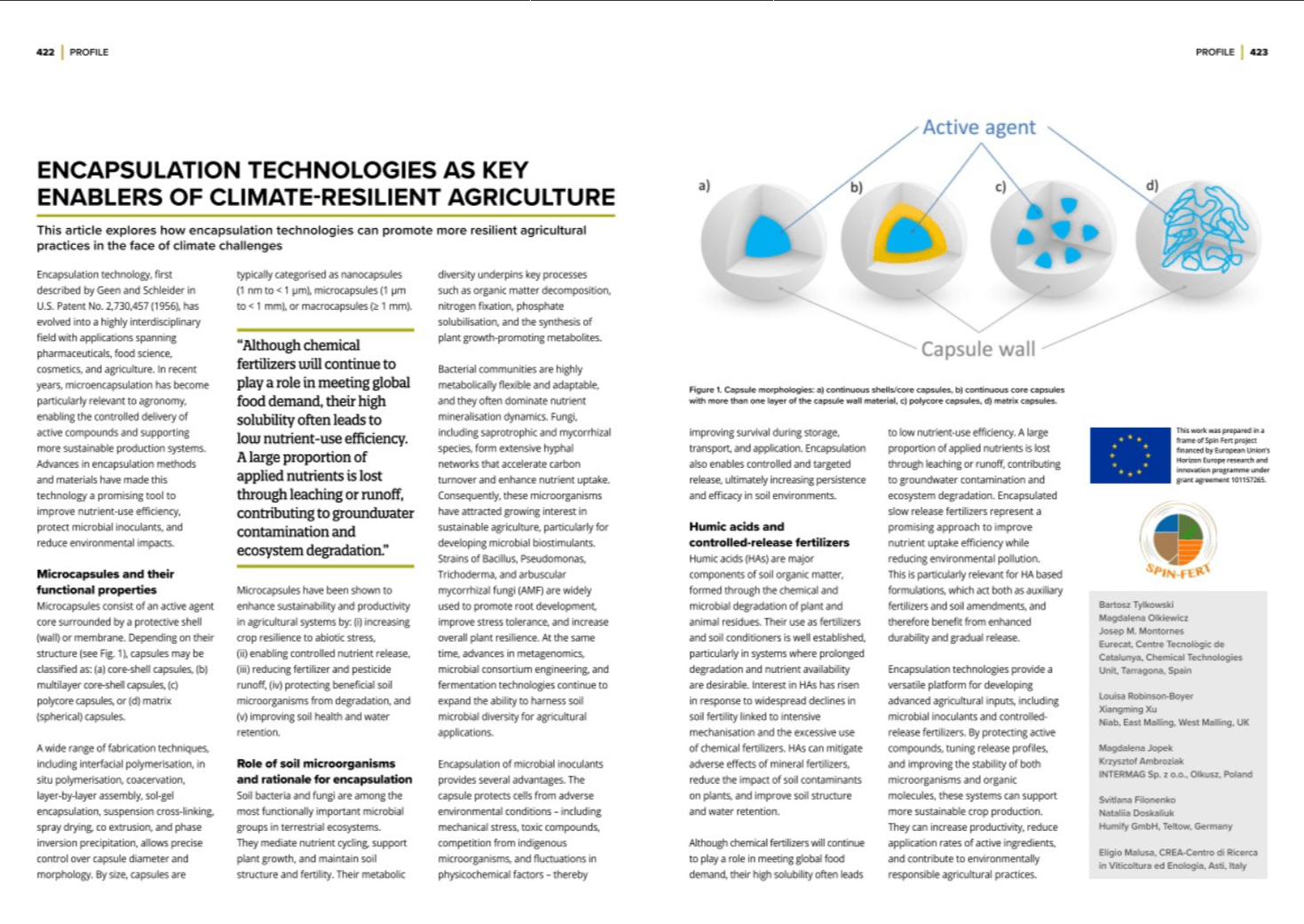
Encapsulation technology, spanning nanocapsules to macrocapsules in core-shell, multilayer, polycore, or matrix forms, has emerged as a versatile tool for agriculture, enabling the controlled and targeted release of active agents such as microbial inoculants, humic acids, and fertilisers while protecting them from environmental stress, degradation, and premature loss. By improving nutrient-use efficiency, prolonging persistence and efficacy in soil, and reducing leaching, runoff, and application rates, these technologies offer a promising route to more climate-resilient, productive, and environmentally responsible agricultural systems.
SPIN-FERT: INNOVATIONS FOR SOIL, IMPACT FOR PEOPLE AND POLICIES
Author: Eligio Malusa
Open Access Government – January 2026 edition, p. 426-427
https://doi.org/10.56367/OAG-049-12381
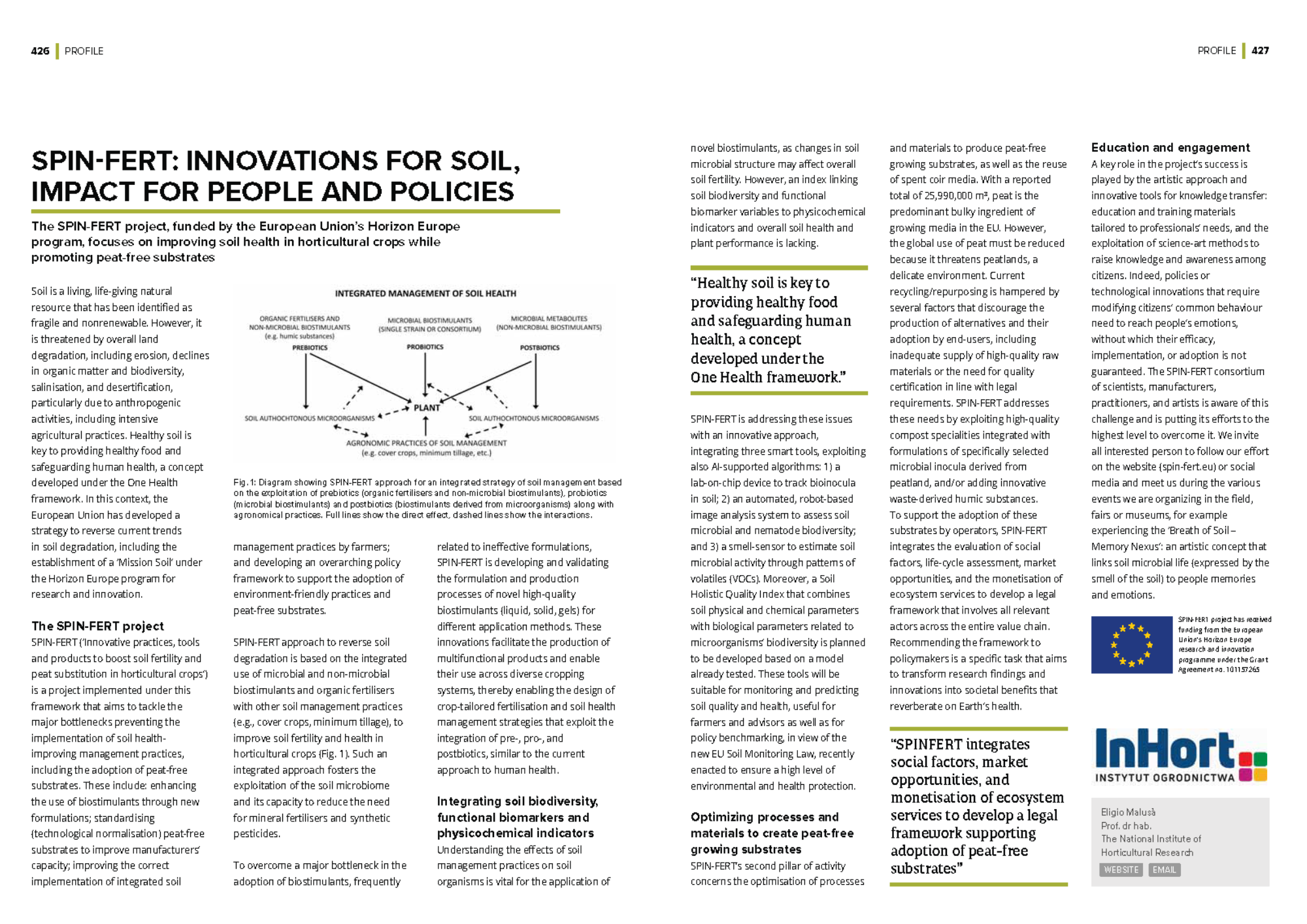
Healthy soil is essential for sustainable food systems, climate resilience, and human well-being. Under the EU Horizon Europe Mission Soil, the SPIN-FERT project addresses soil health in horticulture by validating innovative soil fertility management solutions and developing peat-free growing substrates. SPIN-FERT integrates microbial and non-microbial biostimulants with sustainable agronomic practices, which implementation is supported by smart monitoring tools including lab-on-chip tracking of bioinoculants and soil “smell-sensing” technologies. By combining data of soil biodiversity, functional biomarkers, and physicochemical parameters into a Holistic Soil Quality Index, the project supports farmers, advisors, and policy-makers in assessing soil fertility. Alongside technological innovation, SPIN-FERT emphasises education, stakeholder engagement, policies recommendations and science-art approaches to foster behavioural change and accelerate the transition toward healthier soils across Europe and peat-free horticulture.
The SPIN-FERT project: Soil health and peat-free growing substrates
A major effort in the project is dedicated to optimising and scaling up the production process of various bio-based and waste-derived fertiliser products, applying a circular economy approach. Therefore, wastes from the agro-industry are processed into composts of various compositions. They are then formulated into growing substrate specialities through the addition of specifically selected microbial strains and waste-derived artificial humic substances to improve their characteristics and applicability to different plants, particularly for the nursery and pot plant industry. Spent choir is also recycled and revitalised by mixing it with microbial inocula and thus reducing the amount of waste produced by advanced horticultural cropping systems (e.g. soilless).
link: Open Access Government